


Tooth Troubles; Signs of Pet Dental Disease and the Cleaning Process
Bad breath is easy to dismiss as “pet breath,” but in cats and dogs it can be the first sign of a painful mouth. Dental disease is one of the most common health problems seen in companion animals, and it often starts quietly. The good news is that dental disease can often be slowed, treated, and in many cases prevented with the right mix of veterinary care and home habits!
This guide explains what to watch for, how dental cleanings work, why anesthesia is needed, and which pets need extra dental attention.
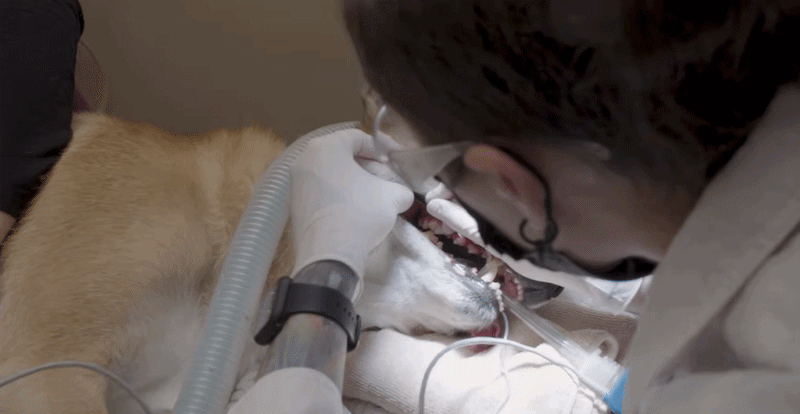
Dental disease starts below the gumline
What you see on the teeth is only a small fraction of the actual damage happening out of sight beneath the gums

Most pet dental disease begins with plaque. Plaque is a soft film made of bacteria, saliva, and food particles.
If it stays on the teeth, it hardens into tartar. Tartar is the yellow or brown buildup often seen along the gumline.

The visible tartar matters, but the bigger problem is what happens where the tooth meets the gum.
Bacteria irritate the gums and can move deeper, damaging the tissues and bone that hold teeth in place. This is called periodontal disease.
Dental disease can cause:
Inflamed, bleeding gums
Oral pain
Loose or missing teeth
Tooth root infections
Bad breath
Difficulty eating
Jawbone damage in severe cases

🐈⬛ Tooth resorption is a common dental problem for cats 🐈⬛
Cats can also develop painful dental problems that are not always obvious
from tartar alone, including resorptive lesions. These occur when the tooth structure breaks down, often near or under the gumline. They can be extremely painful and may need dental X-rays to diagnose properly.

Tooth resorption occurs in five stages.
Stage 1, there is an enamel defect, and the lesion is typically not very sensitive as it hasn't reached the dentin.
Stage 2 involves the lesion penetrating both the enamel and dentin.
Stage 3 is reached when resorption advances into the pulp chamber (nerve).
Stage 4, a significant portion of the tooth’s hard structure has been destroyed.
Stage 5, most of the tooth has been resorbed, leaving just a bump covered by gum tissue.
Dogs often show heavier tartar and gum disease, especially as they age. Small dogs and pets with flat faces (brachycephalic) are particularly prone because their teeth are crowded into small jaws, which creates tight spaces where plaque collects.
Signs of dental pain in cats and dogs
Pets rarely cry out from dental pain. Some simply change how they eat or avoid certain behaviours. The signs can be subtle at first, so it's important to know what to look for.
⚠️ Watch for these warning signs: ⚠️
Bad breath that smells foul, sour, or rotten
Red, swollen, or bleeding gums
Yellow or brown tartar along the teeth
Drooling more than usual
Bloody drool
Pawing at or rubbing their face
Chewing on one side, taking longer to eat
Dropping food while eating
Avoiding hard kibble, treats, or toys
Hiding, irritability, or reduced grooming
Swelling under the eye or along the jaw
Loose, broken, or missing teeth
Bleeding gums Tartar buildup Bloody drool Drooling Face rubbing
A pet with dental pain may still finish every meal. That does not mean the mouth feels fine. Eating is not a reliable pain test. A better clue is any change from the pet’s normal routine, especially around chewing, grooming, play, or touch near the face.
Cats can be especially subtle. A cat with a sore mouth may stop grooming, become picky, swallow kibble whole, or sit near the food bowl without eating much. Dogs may become less interested in chew toys or resist having their muzzle handled.

The stages of dental disease
Veterinarians often describe periodontal disease in stages or grades.
The exact stage can only be confirmed with a full oral exam, probing around the teeth, and dental X-rays. Still, the general pattern is helpful.
Stage | What is happening | What owners may notice |
Stage 0 | Healthy teeth and gums | Pink gums, clean teeth, no bad breath |
Stage 1 | Gingivitis begins | Redness along the gumline, mild bad breath |
Stage 2 | Early periodontal disease | More tartar, gum inflammation, early attachment loss |
Stage 3 | Moderate periodontal disease | Gum recession, pain, possible loose teeth |
Stage 4 | Advanced periodontal disease | Severe infection, loose teeth, tooth loss, bone damage, foul smell |
Stage 1 Stage 2 Stage 3 Stage 4/5 Stage 5
Stage 1 can often be reversed with professional cleaning and good home care. Once deeper support structures are damaged, the goal shifts to controlling infection, treating pain, and preventing more loss.
By Stage 3 or 4, extractions may be the only option for badly diseased teeth. A painful, loose tooth does not help a pet chew, it usually causes them to avoid food altogether. Removing it can make eating more comfortable once the mouth heals.
Pets who are more prone to dental disease
Any cat or dog can develop dental disease, but some pets are at higher risk.
🐩 Small dogs often need earlier dental care 🐩
Small-breed dogs tend to have crowded teeth and smaller spaces between them. Plaque and tartar build up quickly in those tight areas. Small dogs may also retain baby teeth, which can trap debris and push adult teeth out of normal alignment. Some breeds are also prone to malocclusion, or an underbite/overbite.
Common small dogs we see here for dentals are...
Yorkshire Terrier
Chihuahua
Toy & Mini Poodle
Dachshund
Pomeranian
Maltese
Havanese
Shih Tzu
Yorkshire Terrier Chihuahua Mini/Toy Poodle Dachshund Pomeranian Maltese Havanese Shih Tzu
These dogs may need dental assessments and cleanings earlier in life than large-breed dogs.
🐾 Flat-faced pets have crowded mouths 🐾
Brachycephalic, or flat-faced, pets often have compressed jaws. Their teeth may rotate, overlap, or sit at unusual angles. This makes brushing harder and creates places where plaque hides.
Higher risk flat faced breeds include...
Pug
French Bulldog
English Bulldog
Boston Terrier
Shih Tzu
Boxer
Persian
Exotic Shorthair
Pug French Bulldog English Bulldog Boston Terrier Shih Tzu Boxer Persian Exotic Shorthair

Flat-faced pets may also have breathing concerns, which makes proper anesthetic planning especially important.
These pets can still have safe dental procedures, but they need careful monitoring and an experienced veterinary team.
🦷 Age, diet, and chewing habits matter too 🦷
Dental disease becomes more common with age, but it is not only an “old pet” problem. Young cats and dogs can develop gingivitis, retained baby teeth, fractured teeth, or breed-related crowding.
Soft food does not automatically cause dental disease, and kibble does not automatically prevent it. Some dental diets and chews are designed to reduce plaque, but regular kibble often shatters too easily to scrub teeth well.
What happens during a professional dental cleaning?
A proper veterinary dental cleaning is much more than scraping visible tartar. It is a medical procedure that checks the entire mouth, including the area under the gums.
📝 The process usually includes several steps 📝
A pre-anesthetic assessment comes first
Before the cleaning, the veterinary team reviews the pet’s health history and performs a physical exam. Bloodwork may be recommended, especially for older pets or those with health conditions. This helps assess organ function and guides anesthetic choices.
The team may also discuss expected costs, possible extractions, and whether dental X-rays are planned.
The pet is sedated and placed under general anesthesia
Once sedated, the pet has a breathing tube placed to protect the airway and deliver oxygen and anesthetic gas. The team monitors heart rate, breathing, blood pressure, oxygen levels, temperature, and other signs.
This allows the veterinarian and technicians to work safely and thoroughly without causing fear or pain.
The teeth are cleaned above and below the gumline
The team removes tartar from the tooth surfaces and, most importantly, from under the gumline. This area cannot be properly cleaned in an awake or just sedated pet.
The teeth are then polished. Polishing smooths microscopic scratches on the enamel, making it harder for plaque to stick right away.
The veterinarian examines each tooth
A full dental chart records already missing teeth, fractures, gingival recession, mobility, and other concerns. Dental X-rays may reveal problems hidden below the surface, such as root disease, bone loss, remaining roots from broken teeth, or resorptive lesions.
If a tooth is painful or badly diseased, the veterinarian may recommend extraction. Local nerve blocks and pain medications help keep the pet comfortable during and after the procedure.


Why is anesthesia required and not just sedation?
This is one of the most common questions about pet dentistry. If a pet is calm, why not just sedate them and clean the visible tartar?
The answer is simple: a complete dental cleaning cannot be done safely or humanely with sedation alone.
Sedation may make a pet sleepy, but it does not provide the same control, pain and fear prevention, airway protection, or stillness as general anesthesia. Dental work involves water, bacteria, sharp instruments, and sensitive tissues.
General anesthesia allows the team to:
Clean thoroughly under the gumline
Take clear dental X-rays
Probe around each tooth and chart
Protect the airway with a breathing tube
Prevent stress, fear, and sudden movement
Treat painful teeth in the same procedure
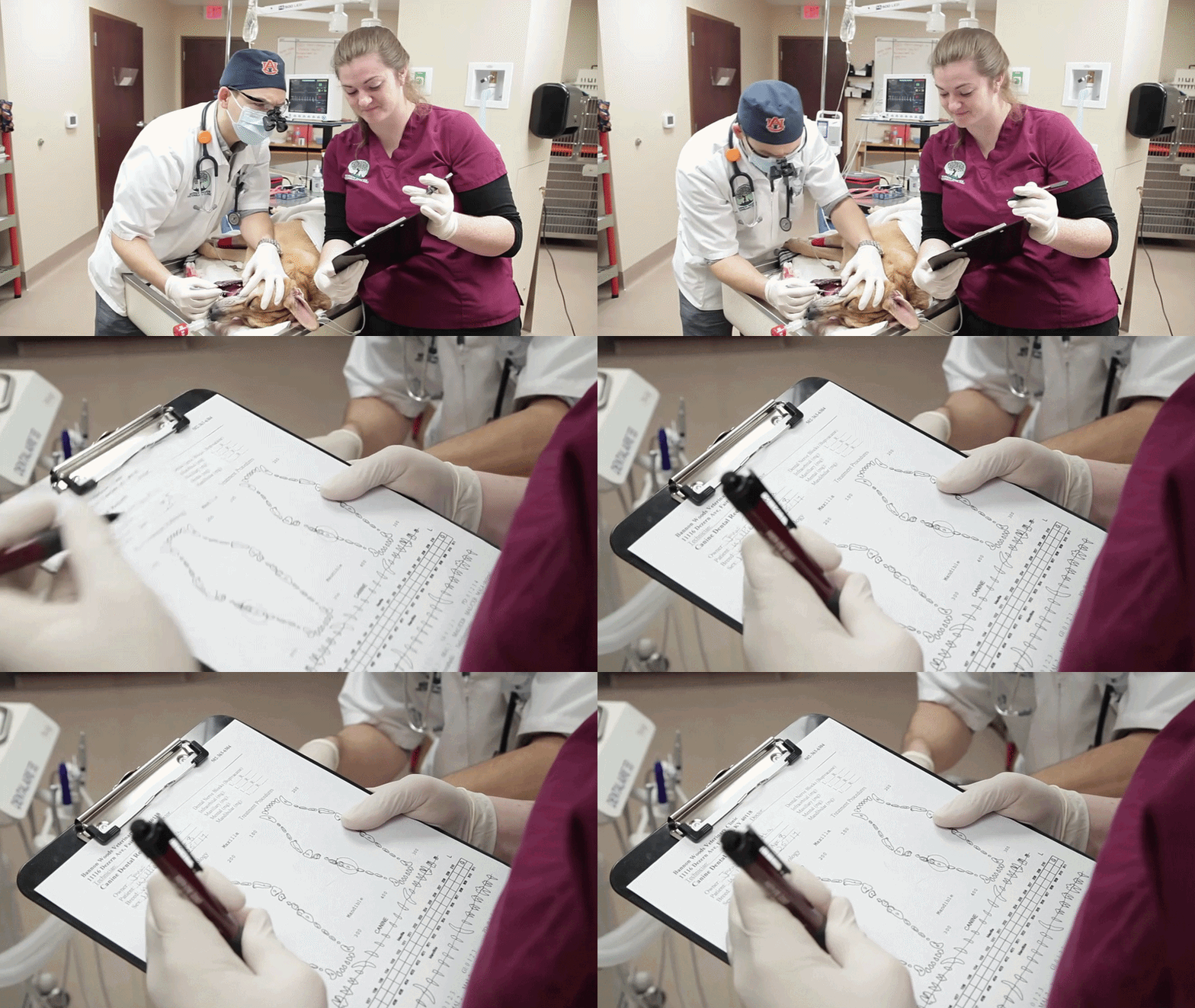
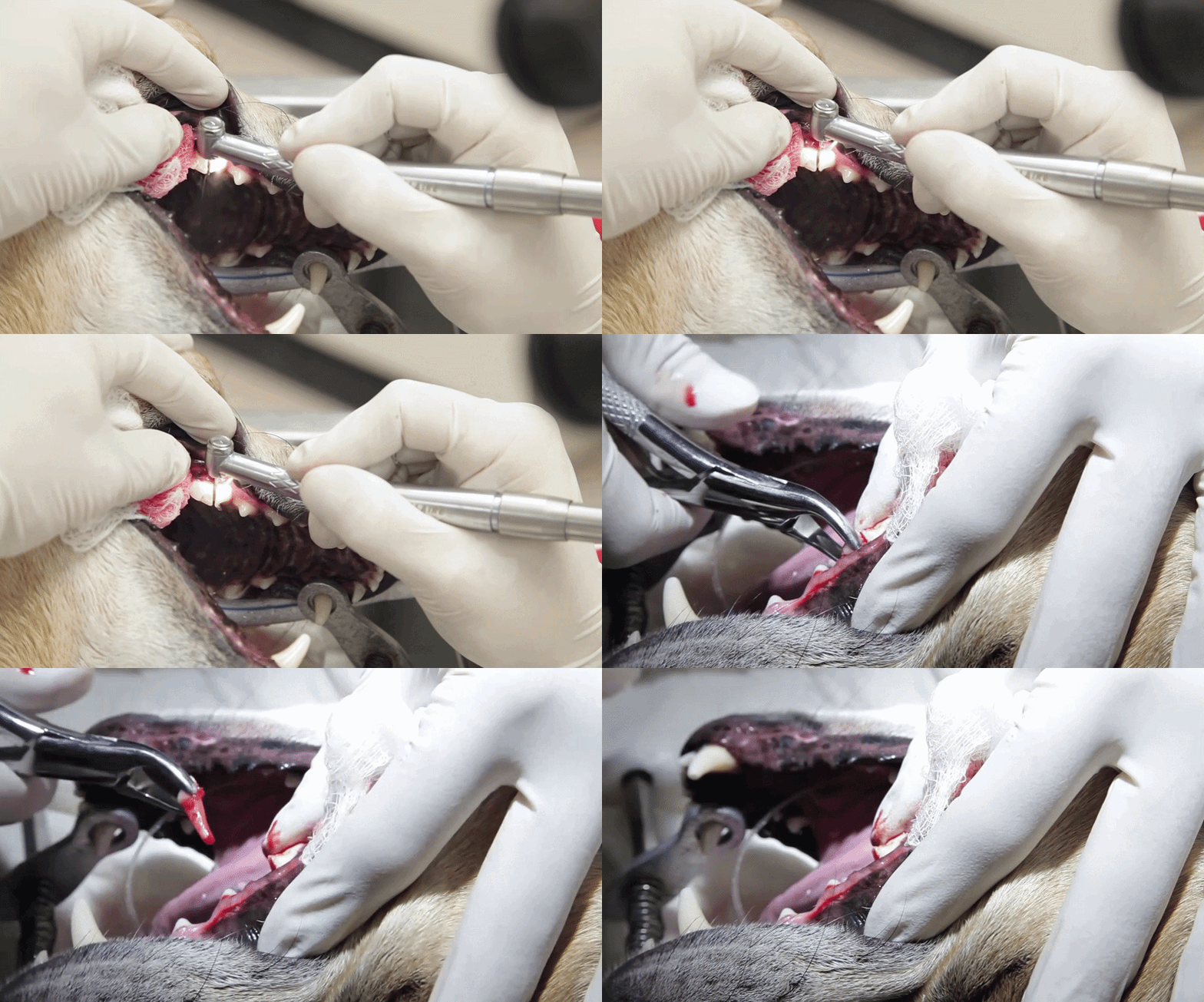

Awake or lightly sedated cleanings focus only on what can be seen.
It may make teeth look cleaner but disease remains festering under the gums. It helps owners feel better, not the pet.
Anesthesia always carries some risk, but modern veterinary anesthesia is planned and monitored carefully.
For many pets, untreated dental infection and chronic pain create a greater health and welfare concern than a well-managed anesthetic procedure.
At-home prevention that actually helps
Home care works best when it starts before severe disease develops. It cannot remove established tartar or fix infected teeth, but it can slow plaque buildup after a professional cleaning.

🪥 Brush their teeth if possible
Tooth brushing is the gold standard for home dental care. Use a pet-safe toothpaste, never human toothpaste, and a soft pet toothbrush or finger brush.
Start small:
Let your pet lick the toothpaste; experiment with different flavours!
Touch their mouth and muzzle gently.
Lift the lip for one or two seconds.
Brush a few front teeth.
Build up to the outer surfaces of more teeth.
Start when they're puppies or kittens to desensitize them.
The outer surfaces matter most because the tongue and food helps clean the inner surfaces better. Daily brushing is ideal, but brushing several times a week is still helpful.
🦴 Use dental products with proof behind them
Dental chews, diets, wipes, gels, and water additives vary in quality. Look for products accepted by the Veterinary Oral Health Council, often shown as the VOHC seal. Products many vets recommend are C.E.T. products which stands for Clean Every Tooth. These products have met standards for reducing plaque or tartar!
Choose chews carefully. Avoid items that are hard enough to break teeth, such as bones, antlers, and hooves. Rawhide is also risky as your pet may eat the entire chew and cause a gastro block.
A useful rule is that if you cannot indent the item with a fingernail,
it's probably too hard for safe chewing!
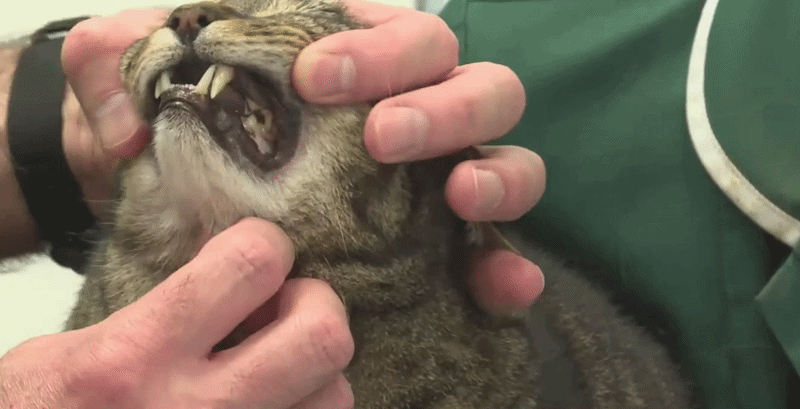
🗓️ Book regular oral exams
Veterinary exams help catch problems before they become advanced. Some pets require dental cleanings every few years, while others get lucky and never do! Some pets, especially small dogs and flat-faced breeds, may need them more often.
Catching a problematic tooth early on prevents it from decaying and causing pain, as well as from affecting nearby teeth. This not only spares your pet from discomfort but also reduces the duration of dental procedures, minimizing anesthetic risk.
It's not a secret that dental procedures are expensive.
The best way to keep the cost down is to keep their teeth as clean as possible at home and to catch problems early. Shorter and less complex dentals are significantly cheaper than long, complicated procedures!
A healthier mouth = a more comfortable pet!
Dental disease in cats and dogs is common, but it should never be ignored as normal aging or harmless bad breath.
The early signs can be subtle, and many painful problems hide under the gumline where only a proper veterinary dental exam can find them.
The best plan is simple: watch for changes, schedule regular oral exams, follow your veterinarian’s advice about cleanings, and build a home routine your pet can tolerate.
Brushing, safe dental chews, and proven dental products can make a real difference.
Most of all, do not wait for a pet to stop eating. By that point, dental pain may already be severe. A clean, comfortable mouth helps pets eat, play, groom, and enjoy daily life with less pain!


Comments