PHONE 250 545 8200
EMAIL INFO@CRESCENTFALLSVET.COM


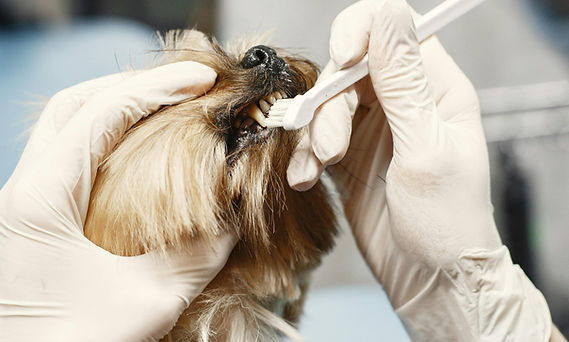
DENTISTRY
Yes! Dogs and cats need their teeth cleaned, too!
There's a few different reasons why domesticated cats and dogs need dental care. Wild animals also get dental tartar, tooth fractures, and root abscesses. A big difference between them and our own pets is that wild animals generally do not live long enough for dental decay to significantly impact their health.
Being proactive in your pets dental health from a young age will prevent dental disease from accumulating. This means your pet is in less pain, it saves them the risks of anesthesia during long dental cleanings, and saves YOU from the added costs of multiple extractions and extended cleaning time!

Yearly Wellness Exams
We encourage an annual health check for a number of reasons, one of them being the included dental exam! This is when we can catch early stages of gingivitis, tooth resorption, broken or fractured teeth, and other manifestations of dental disease.
This betters our chances of being able to reverse the affects of periodontal disease before it's too far along and extraction is our only option.

Prophylaxsis (Scale & Polish)
Regular dental scaling is crucial for your pet's health. It helps reduce dental disease and bad breath. This helps protect vital organs like the heart, liver, and kidneys from harmful oral bacteria. The procedure involves an ultrasonic cleaning which cleans the crown and UNDER the gumline (which cannot be done safely without anesthetic), followed by a polish to ensure all teeth are bright and shiny. Keep your pet's teeth healthy and vibrant with routine dental care!

Radiographs (X-Rays)
At our practice, we prioritize complete oral health by performing full mouth radiographs.
Just like icebergs, only a fraction of each tooth is visible above the surface, making it essential to look deeper. Many problems lie below the gumline in the roots, and without radiographs, we won't know.
With radiographs, we can accurately identify which teeth need extraction before the entire tooth becomes compromised, infected, and painful. The mor we know, the more we can help.

Extractions
There are several reasons for a tooth to be extracted.
-
Periodontal disease
-
Fractured or broken teeth
-
Malalignment or crowding
-
Tooth root abscess
-
Retained deciduous (baby) teeth
-
Tooth resorption
During this procedure the veterinarian slowly and carefully separates the tooth from the surrounding tissues to safely remove it. Medication may be placed inside the resulting hole, or it may be sutured closed to promote healing.

How We Monitor During Dentals
Dentals can be a lengthy process, but don't worry! We monitor your pets vitals before we even start the procedure!
Once the vet has examined your pet that morning and has cleared them for their procedure, we begin by giving an intramuscular injection to sedate our patient. This way, we can safely place an IV catheter to give fluids and other necessary medications before, during, and after their dental.
Once your animal is sleepy enough, we're able to intubate by placing an endotracheal (ET) tube into their trachea. This is how we ensure they have plenty of oxygen and keep a monitored flow of isoflurane to fully anesthetize your pet.
From there, we hook them up to a blood pressure cuff, an ECG monitor, a respiration / blood oxygenation monitor, and a temperature probe. While the vet works, a tech or assistant will constantly monitor your pets vital signs for any changes and record these vitals on your pets anesthetic record.
.jpg)
Dental Grading Scale
Many clinics score dental disease on a grading scale ranging from Grade 1-4, us included!
GRADE 1: Soft plaque has built up on the surface of the teeth. Some tartar is also present. Early gingivitis, red, inflamed gums.
GRADE 2: Moderate tartar buildup is present, pushing the gums away from the teeth. The gums are red, swollen, painful, and may bleed when touched.
GRADE 3: Plaque and tartar formation is heavy. Gum recession forms pockets of infection along the teeth. The infection has destroyed tissues around the teeth, making them loose. The gums are bright red and bleed freely.
GRADE 4: Severe tartar formation and gum disease. Bacteria and infection have caused extensive tissue death. Roots are infected, abscessed, and rotten. The bone surrounding teeth has deteriorated.

We totally understand wanting to avoid anesthesia whenever possible, but you may actually be doing more harm than good opting for an awake (anesthesia-free) dental rather than anesthesia.
Anesthesia-free cleaning might seem like a convenient option, but radiographs and a below-the-gum cleaning can't be performed without full anesthesia or by a non-veterinarian. We're unable to tackle the actual issues under the gumline which is where the vast majority of dental problems lie.
We highly recommend a thorough dental cleaning in a controlled and safe environment, ensuring that any pain or stress is properly managed. Your pet's dental health deserves the best care possible.