


Behind the Head Tilt: 5 Signs of Old Dog Vestibular Disease
It can look scary: a senior dog suddenly tips their head, staggers like they are drunk, flicks their eyes back and forth, and walks in a circle. For many families, the first fear is a stroke. In some cases though, the cause is old dog vestibular disease, also called canine idiopathic vestibular syndrome.
This condition affects the vestibular system, which helps control balance and spatial awareness. When that system misfires, the world may feel like it is spinning. The good news is that many dogs improve quickly with supportive care. Knowing the various ways this condition can look helps to get your pup's world back on its axis faster!
This article is for general information only and is not a substitute for veterinary advice.
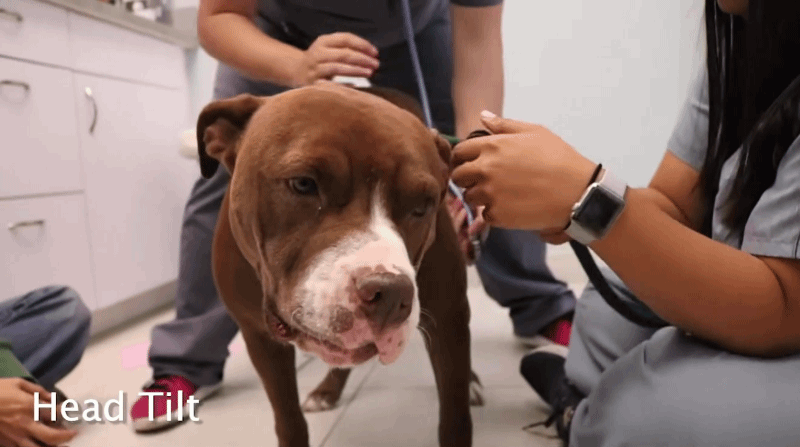
Head tilted to one side

The head may stay tipped even when the dog is sitting or lying down. Their head stays tilted to the same side, not swapping back and fourth.
The head tilt associated with vestibular disease is not just a random occurrence; it indicates a significant disruption in the dog's balance.
It can range in severity, from something just a little off to quite significant. An ongoing head tilt can be associated with other things, even something as minor as an ear infection, but a tilted head should always be evaluated by a vet.
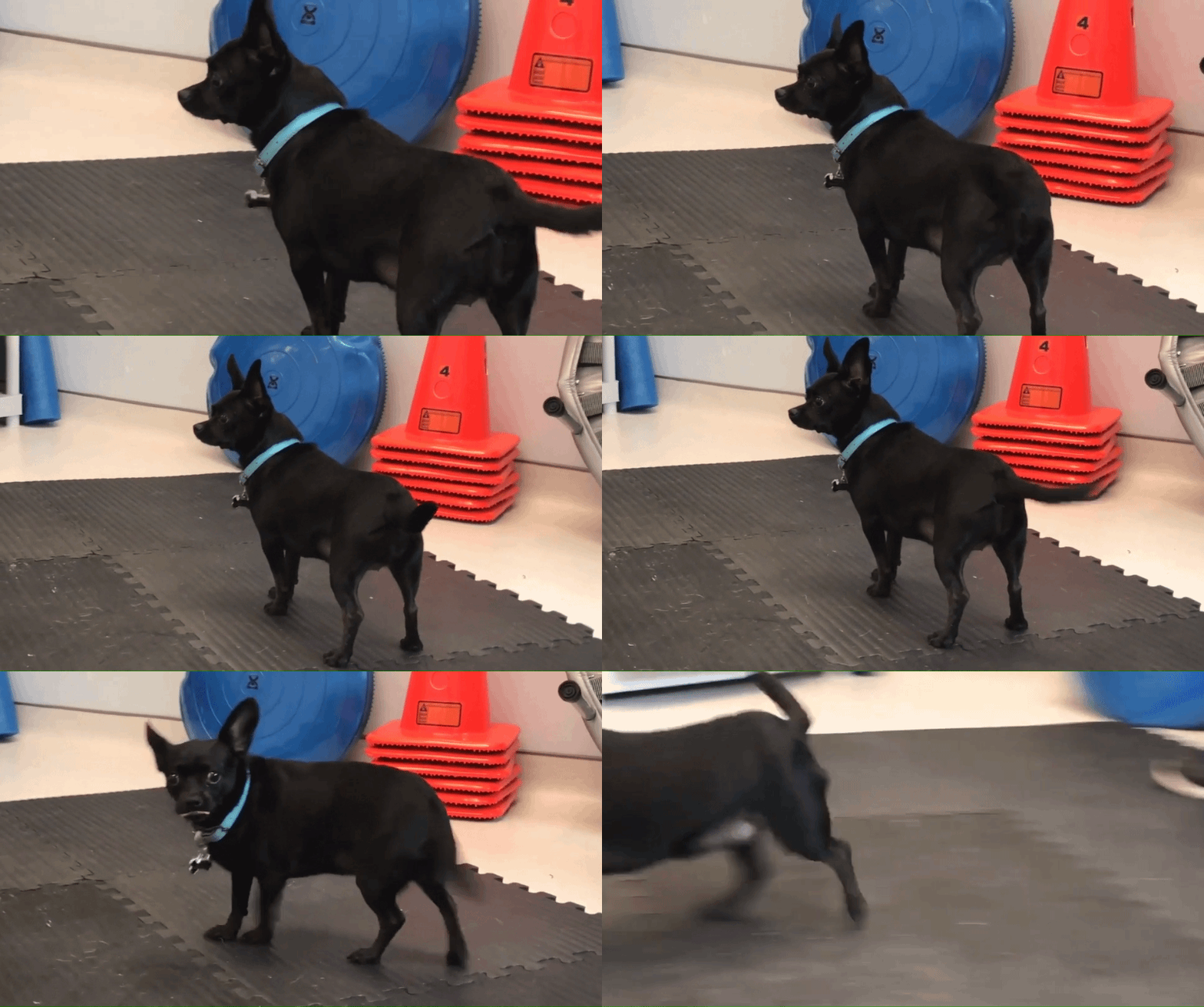
Loss of balance
Dogs may stumble, sway, lean, fall, or spread their legs wide to steady themselves. The vestibular system includes parts of the inner ear and brain. When something affects this system, balance signals become confused. A dog’s body may feel upside down or spinning even while they are lying still.

On the side their heads tip, dogs will tend to stumble, lean or wobble in this direction. Because of their struggles to balance, a senior dog may be reluctant to stand or may be unable to once they try.
This can snowball into other problems like muscle wasting, soiling themselves, sores, and other complications from not moving.
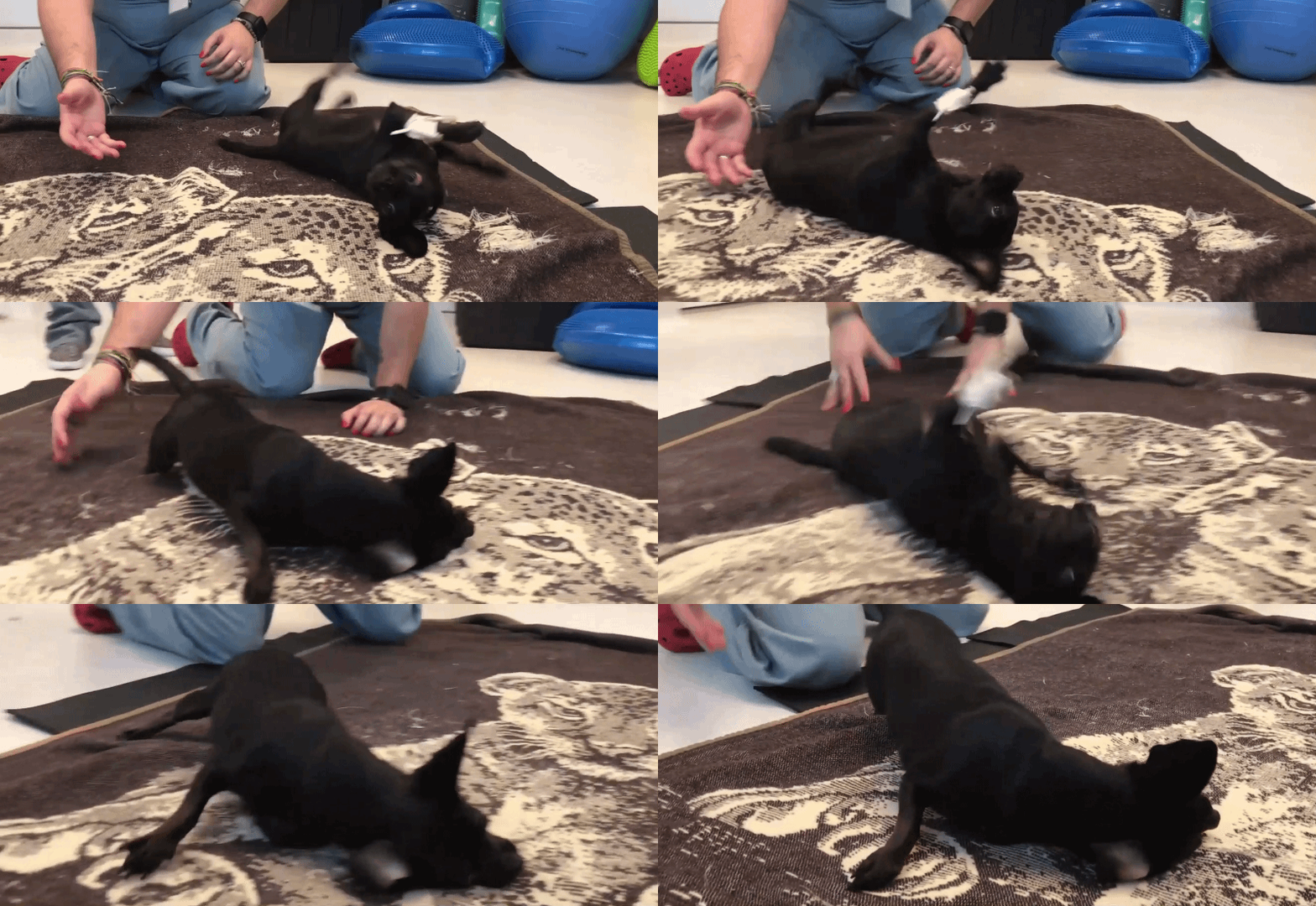
Circling or rolling

Some dogs walk in tight circles or roll toward one side because they cannot correct their balance.
In severe cases, a dog may even alligator roll on the 'tilted' side over and over. This is a severe loss of balance.
Many dogs can adjust and improve significantly within a few weeks!
Rapid, involuntary eye flicking

Nystagmus is the term used to describe involuntary eye movements. The eyes may move side to side, up and down, or in a circular pattern.
The two most common types are nystagmus are jerk and pendular nystagmus
Jerk Nystagmus: A slow drift in one direction followed by a fast snap back in the opposite direction (as seen above)
Pendular Nystagmus: An equal back-and-forth oscillation without a distinct fast/slow phase.
Nausea and Vomiting

Vertigo can make dogs drool, vomit, refuse food, or look deeply uncomfortable.
Vestibular disease causes vertigo because it disrupts the signals the inner ear and brain use to sense body position and motion.
This creates a false sensation that your dog or their surroundings are spinning- many dogs with vestibular disease are described as having a "drunk" walk. Just like it would for us, this makes them dizzy, and therefor, nauseous.
Why does idiopathic vestibular syndrome happen?
“Idiopathic” means a disease, symptom, or condition arises from an unknown source, so unfortunately the exact reason this happens is still a mystery for now. This is why canine idiopathic vestibular syndrome is often nicknamed 'old dog syndrome.'
Because the symptoms overlap with other conditions, it is not safe to diagnose vestibular disease at home based on appearance alone. A veterinarian can check the ears, eyes, reflexes, gait, and overall neurological status.
Timeline of symptoms and recovery
This condition comes on fast and hard. The first day or two are usually the worst. Symptoms often peak during the first 24 to 48 hours, when dizziness, falling, and nausea may be most intense.
Many dogs then begin to show clear improvement within about 72 hours. That does not mean they are fully recovered, but they may stand more easily, eat small amounts, or seem less distressed.
Time period | What commonly happens |
First 24 to 48 hours | Symptoms are often at their worst. Dogs may fall, vomit, refuse food, or need help moving. |
Around 72 hours | Many dogs show noticeable improvement. Balance may still be poor, but nausea may ease. |
1 to 2 weeks | Walking often becomes steadier. Appetite and confidence usually return. |
2 to 3 weeks | Many dogs recover fully or close to fully. A mild head tilt may remain. |
Some dogs recover better than others. Some recover faster, others slower. Some need more time, especially if they have other health issues. A lingering head tilt can remain even after the dog feels well and moves mostly normal again.

How to support them during a flare up
Home care focuses on safety, comfort, and preventing injury while the vertigo settles. Dogs with vestibular disease may panic if they try to stand and fall, so a calm space makes a real difference.
Helpful steps include:
Use non-slip surfaces
Place yoga mats, rugs, or towels on slick floors so your dog has traction.
Block stairs and hazards
Use baby gates or closed doors. A dizzy dog can tumble quickly.
Keep food and water close
Offer bowls at a comfortable height. Some dogs eat better from your hand at first.
Help with bathroom breaks
Use a harness or towel sling for support. Keep trips short and slow.
Keep the environment quiet
Bright lights, loud noise, and too much movement can worsen nausea for some dogs.
Limit carrying when possible
If a dog twists or panics while being carried, both the dog and person can get hurt. Support walking when safe.
Dogs stay alert through an episode, even though their body is not cooperating. They still recognize people, respond to their name, and often want comfort.
A vet will usually want to know when symptoms started, whether they are improving or getting worse, and whether there are other signs such as weakness, seizures, pain, ear discharge, or changes in behaviour. Veterinarians may prescribe anti-nausea medication or motion-sickness medication to help with vomiting and appetite.
Call a vet right away if symptoms are severe, if your dog cannot keep water down, if they seem painful, if they are not alert, or if signs worsen instead of improve. Sudden collapse, seizures, marked weakness, or unusual behaviour should be treated as urgent.
The main takeaway
Old dog vestibular disease can look frightening, but many affected dogs improve within a few days and recover well within 2 to 3 weeks. The first 24 to 48 hours are usually the roughest, and careful home support can prevent falls while the dizziness passes.
The safest plan is simple: get a veterinary assessment, keep the home environment secure, manage nausea if your vet recommends medication, and watch for steady improvement.
With time, patience, and a calm setup, many senior dogs return to their usual routines, even if a small head tilt stays behind. ♡


Comments